It is late May in New Zealand. The mornings have teeth. The sun sets before five and the greens hold dew until mid-morning. If you are a golfer who plays through winter, you already know what this means: an extra layer, waterproofs in the bag, and the quiet satisfaction of having the course almost entirely to yourself.
If you are planning a golf trip from overseas, you probably have no idea what any of this feels like. And that is the problem FairwayPlan's weather system is trying to solve.
Winter golf is a different game
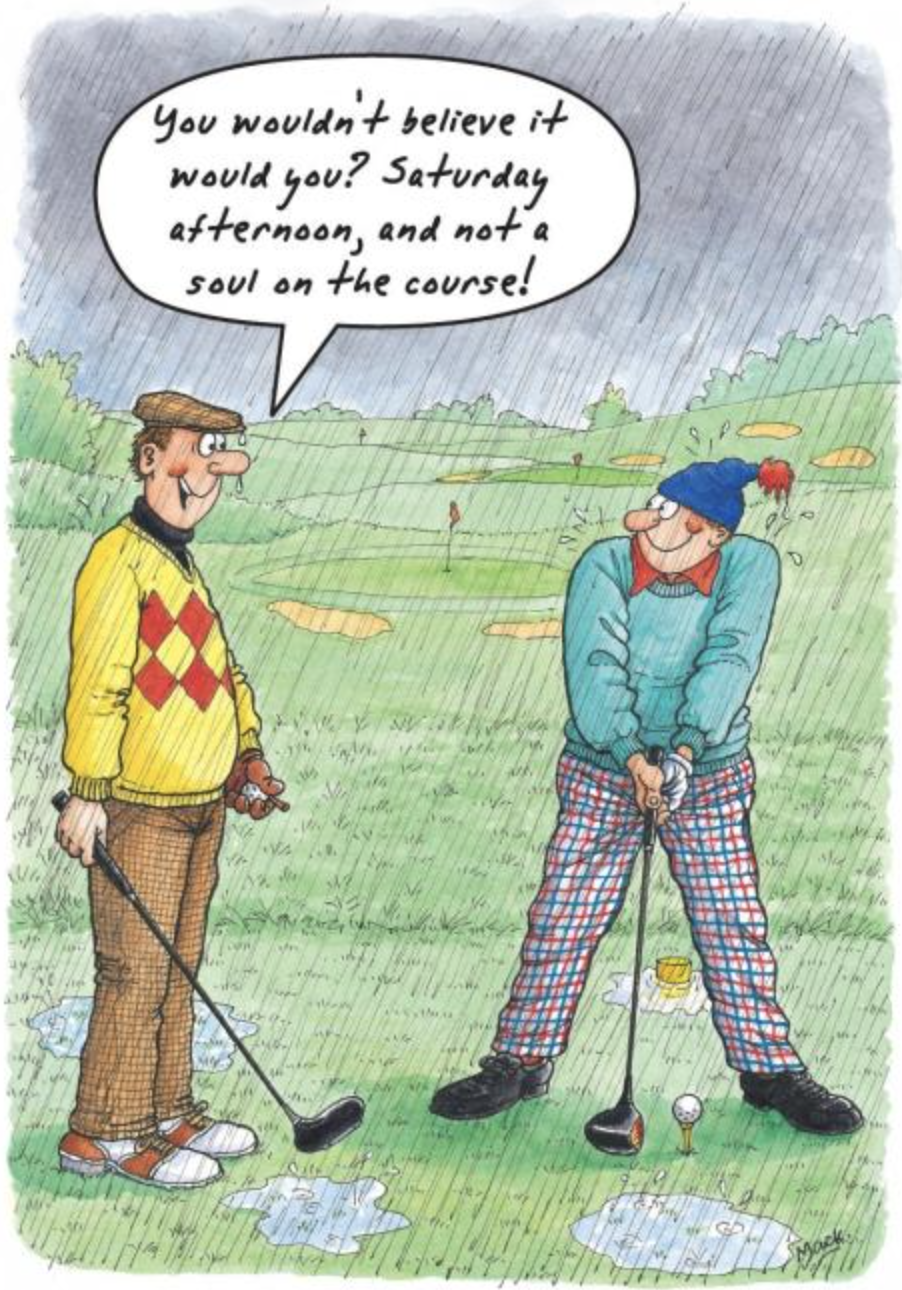
There is a version of New Zealand golf that exists on tourism websites: blue sky, green fairway, mountain backdrop. That version is real. It happens in January and February, mostly in the South Island, and it is genuinely spectacular.
Then there is the version that exists for the other eight months of the year. Southerly winds that make a 150-yard par three play like 180. Rain that comes in sideways, stops, and then comes back from a different direction as if it forgot something. Frost on the tee box that turns your first drive into an act of faith.
Locals play through all of it. They complain, of course, because complaining about the weather is a core part of New Zealand golf, possibly more important than the swing itself. But they play.
Visitors, on the other hand, need to be told. Explicitly. "Bring a rain jacket" is not enough. They need to know that June in Queenstown is not June in Queensland. That Canterbury in July can be beautiful and freezing on the same afternoon. That the West Coast is wet in every month that has a name.
Three tiers of knowing
FairwayPlan's weather system works on three tiers, and each one is a different kind of guess.
Tier 1: the next seven days. For trips starting within a week, the system pulls live forecast data from the Open-Meteo API. Temperature, wind speed, precipitation probability, cloud cover. This is real meteorological data, cached for three hours because forecasts do not change that fast and the API has rate limits. When you generate an itinerary for next Tuesday, the weather card on each day is as accurate as any weather app on your phone.
Tier 2: eight to ninety-eight days out. This is where it gets interesting. You cannot forecast the weather two months from now. You can, however, look at what the weather was on that date for the past five years and take an average. The system queries Open-Meteo's historical archive for the same grid cell (latitude and longitude rounded to one decimal place, roughly 11 kilometres) and computes five-year means. This is cached for 24 hours. It is not a forecast. It is a statistical expectation. "In the past five Julys, this location averaged 9°C with 60% chance of rain." That is useful information, even if it is not a promise.
Tier 3: beyond ninety-eight days. For trips more than three months out, the system falls back to the weather_history table in the database, which holds two years of seeded historical data. If even that is unavailable, a final fallback kicks in: a function called _seasonal_nz_default that generates weather estimates based on latitude and month. It knows that Invercargill in July is colder than Auckland in July. It knows that the West Coast is wetter than Hawke's Bay in every season. It is not sophisticated. It is, however, better than guessing blindly or showing nothing at all.
What to wear is harder than what to expect
The weather data feeds into two things: the solver's scheduling decisions and the clothing recommendations on each day card.
The scheduling part is straightforward. The solver has a weather threshold constraint. If a day's conditions fall below a viability score, the solver prefers to schedule a rest day or shift rounds to better-weather days. It also disables late afternoon tee times from April through September, and early morning slots in June and July, using solar declination calculations to ensure rounds can finish before sunset. The maths is clean. Constraints in, schedule out.
Clothing recommendations are messier. Weather is continuous. Clothing decisions are discrete. At what temperature does "bring a light jacket" become "bring a proper waterproof"? At what wind speed does "hat recommended" become "leave the hat at home, you will spend more time chasing it than wearing it"? These thresholds are judgement calls, and they interact with each other. 12°C with no wind is pleasant. 12°C with 30 km/h gusts off the Southern Ocean is miserable.
The recommendations are stored as a JSONB object with an items array. Each item is a specific piece of clothing or gear with a reason. "Waterproof jacket: precipitation probability above 60%" or "Thermal base layer: wind chill below 8°C." The logic runs server-side every time an itinerary is generated or a slot is edited, so the recommendations stay in sync with any changes.
The sixty-day problem
Most golf trips to New Zealand are planned well in advance. International visitors especially. They book flights months out, accommodation weeks out, and start thinking about golf somewhere in between. By the time they use FairwayPlan, the trip might be two months away.
Two months is the awkward middle of the weather system. Too far for a forecast. Close enough that the five-year average feels imprecise. You are telling someone what to pack for a trip that is sixty days away, using data that is, at best, a well-informed guess.
I have thought about this a lot and arrived at the same conclusion each time: a well-informed guess, presented honestly, is still more useful than nothing. The alternative is what most golf trip planning looks like today. You Google "weather in Queenstown in July," get a generic summary that says "cold," and pack based on vibes. The five-year average for the specific grid cell where the golf course sits, broken down by temperature, wind, and precipitation, is a better vibe.
You are telling someone what to pack for a trip sixty days away. A statistical expectation, presented honestly, beats packing based on vibes.
Playing into the cold
There is something about winter golf that is hard to explain to people who have not tried it. The courses are quieter. The light is different, lower and longer, and the shadows stretch across fairways in ways that make familiar holes look like new ones. The air is sharp enough that you can feel the contact of a well-struck iron in your hands for a full second longer than you would in summer.
It is not for everyone. The cold makes your muscles tight and your patience short. Wet grips require a deliberate effort to hold properly. Putting on frozen greens is an exercise in accepting that the ball will do whatever it wants for the first hour of the morning.
But the green fees drop. The tee sheet is wide open. And there is a particular kind of satisfaction in walking off the 18th in June, hands numb, nose running, knowing that you played the course as it actually is, not the postcard version of it.
The green fees drop. The tee sheet is wide open. Winter golf is not the postcard version. That is the point.
FairwayPlan will tell you what to expect. It will tell you what to wear. It will schedule your rounds around the weather as best it can. The rest is up to you and whatever relationship you have with the cold.